Monitoring

WaterWays Summer Swim Spot Report

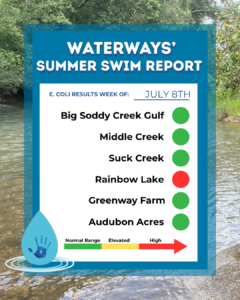
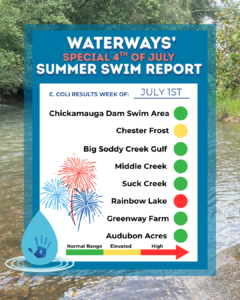
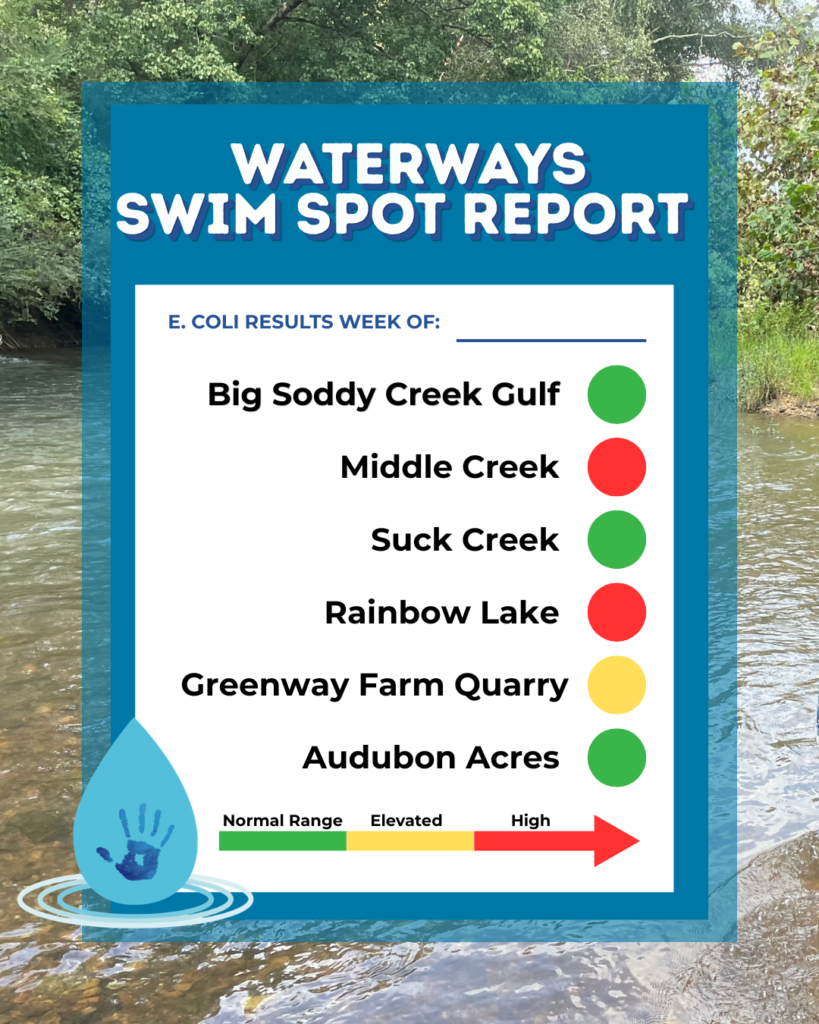
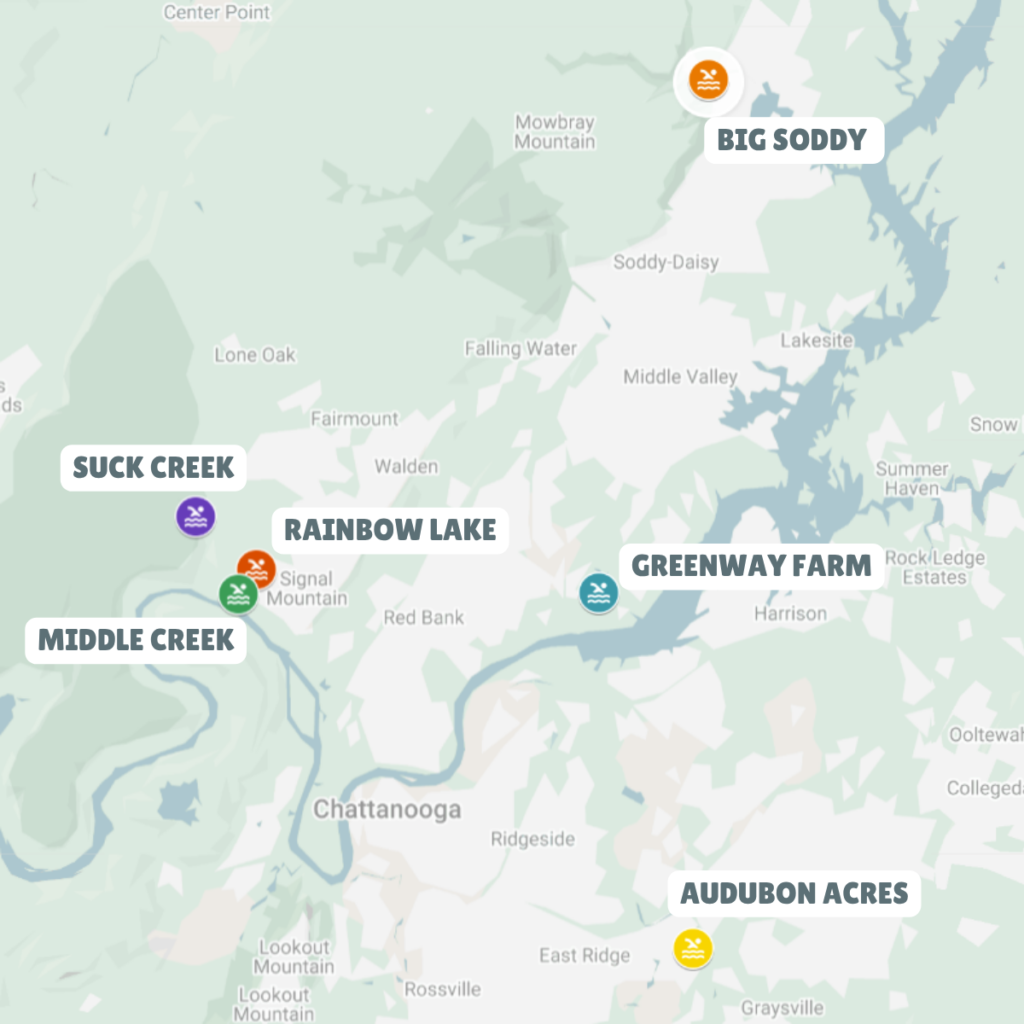
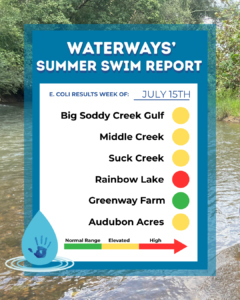
In the summer of 2026, WaterWays is launching an exciting initiative called the “Swim Spot Report.” This project focuses on providing weekly water monitoring for popular swim spots in the Chattanooga region, including Greenway Farm Quarry, Big Soddy Creek Gulf, Audubon Acres, Rainbow Lake, Middle Creek, and Suck Creek. With the rising interest in water quality and health safety from our community, this report aims to offer valuable insights into the conditions of our beloved waterways, ensuring they remain safe and enjoyable for everyone.


We invite you to be part of this positive movement towards clean and safe waterways. By staying informed and spreading awareness, together we can protect and enjoy Chattanooga’s natural creeks and rivers. Stay tuned for weekly updates and let’s make this summer both fun and safe for everyone!

Why Monitor Water Quality?

Swimming in natural creeks and rivers offers a refreshing escape, yet it comes with potential risks. E. coli and other pollutants can pose health hazards, especially during the summer months when increased heat and nutrient loads from agriculture can boost bacterial growth. Monitoring these levels is crucial for public safety.

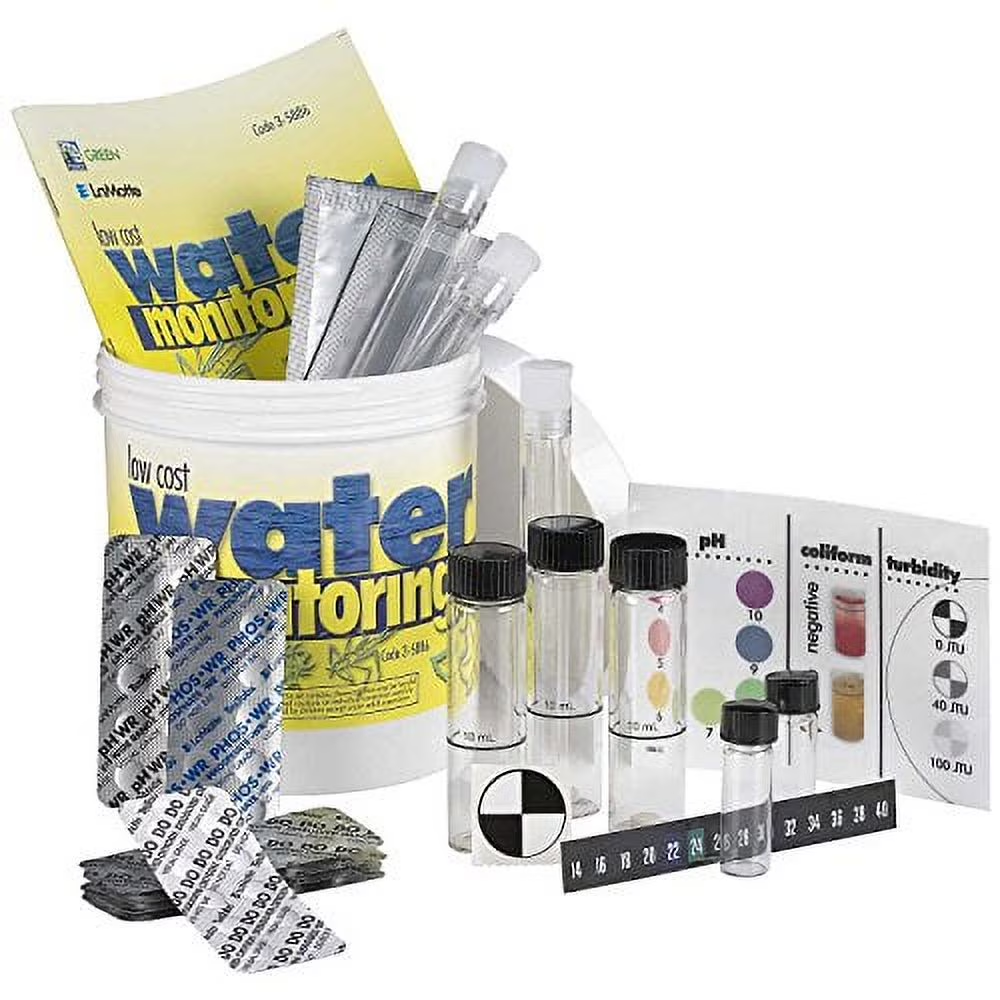
This monitoring effort will consist of testing for abiotic factors such as pH, nitrates, and phosphates, but it will mostly focus on E. coli bacteria. 

Parameters for E. coli monitoring: The U.S. Environmental Protection Agency recommends a Recreational Water Quality Criteria of 235 colony-forming units (CFUs)/100 mL. At this water quality criterion, the EPA estimates an illness rate of 36 per 1,000 people that come into direct contact (swimming, boating, wading, etc.) with that body of water. For single-day wastewater discharges, Tennessee Department of Environment and Conservation (TDEC) enforces a maximum daily limit of 487 colonies per 100 mL for lakes and exceptional Tennessee waters, and 941 colonies per 100 mL for all other recreational waters.

E. Coli

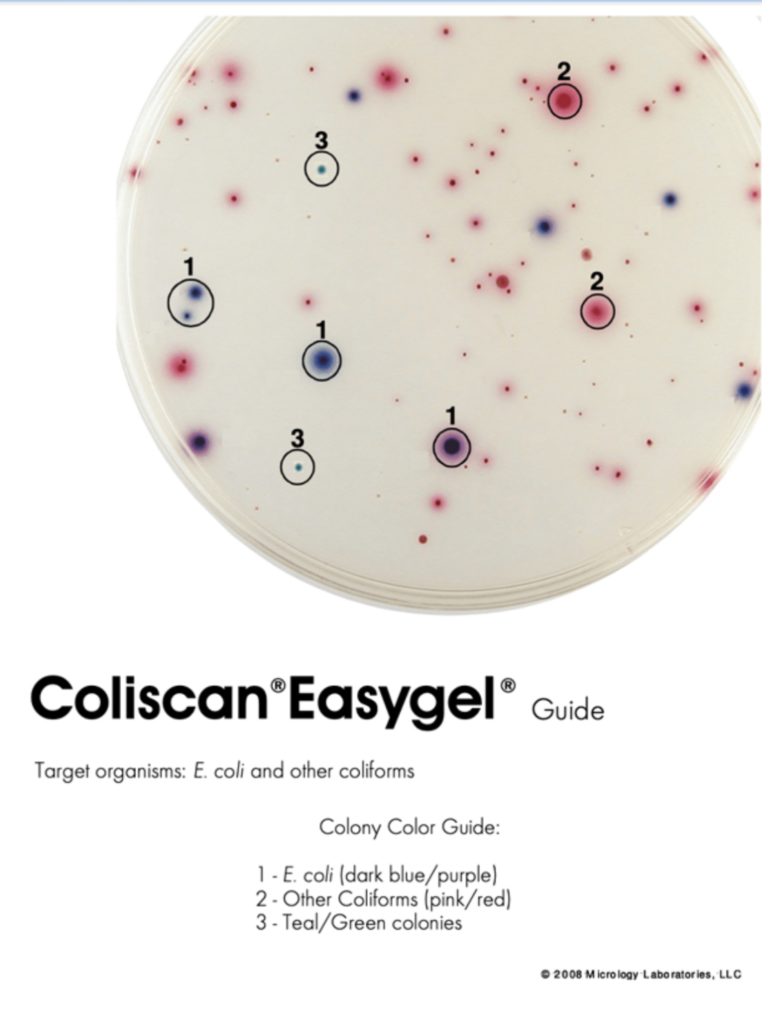
Fecal coliform bacteria are naturally present in the human digestive tract but are rare or absent in unpolluted waters. Coliform bacteria should not be found in well water or other sources of drinking water. Their presence in water serves as a reliable indication of sewage or fecal contamination. Although coliform bacteria themselves are not pathogenic, they occur with intestinal pathogens that are dangerous to human health.

pH is a measurement of the acidic or basic quality of water. The pH scale ranges from a value of 0 (very acidic) to 14 (very basic), with 7 being neutral. The pH of natural water is usually between 6.5 and 8.2. Most aquatic organisms are adapted to a specific pH level and may die if the pH of the water changes even slightly. pH can be affected by industrial waste, agricultural runoff , or drainage from improperly runmining operations.

Nitrate is a nutrient needed by all aquatic plants and animals to build protein. Thedecomposition of dead plants and animals and the excretions of living animals release nitrate into the aquatic system. Excess nutrients like nitrate increase plant growth and decay, promote bacterial decomposition, and therefore, decrease the amount of oxygen available in the water. Sewage is the main source of excess nitrate added to natural waters, while fertilizer and agricultural runoff also contribute to high levels of nitrate. Drinking water containing high nitrate levels can affect the ability of our blood to carry oxygen. This is especially true for infants who drink formula made with water containing high levels of nitrate.

Phosphate is a nutrient needed for plant and animal growth and is also a fundamental element in metabolic reactions. High levels of this nutrient can lead to overgrowth of plants, increased bacterial activity, and decreased dissolved oxygen levels. Phosphate comes from several sources including human and animal waste, industrial pollution, and agricultural runoff .

Temperature is very important to water quality. Temperature affects the amount of dissolved oxygen in the water, the rate of photosynthesis by aquatic plants, and the sensitivity of organisms to toxic wastes, parasites and disease. Thermal pollution, the discharge of heated water from industrial operations, for example, can cause temperature changes that threaten the balance of aquatic systems.

Turbidity is the measure of the relative clarity of water. Turbid water is caused by suspended and colloidal matter such as clay, silt, organic and inorganic matter, and microscopic
organisms. Turbidity should not be confused with color, since darkly colored water can still be clear and not turbid. Turbid water may be the result of soil erosion, urban runoff, algal blooms, and bottom sediment disturbances which can be caused by boat traffic and abundant bottom feeders.

 Why do we test for Escherichia coli? Escherichia coli or E. coli is a common indicator of fecal contamination in freshwater. Fecal contamination typically refers to waste/feces from warm-blooded animals (livestock, dogs and cats, humans, birds and other wildlife), which can carry disease-causing bacteria in humans (i.e. human pathogens). Most E. coli strains are harmless to humans, but when E. coli levels are elevated in a body of water, that indicates the likely presence of pathogens – Salmonella, Legionella, Giardia, and Cholera are all examples of waterborne pathogens.  Common symptoms of waterborne illnesses include diarrhea, vomiting, nausea, cramps, fever, or skin, ear, or eye problems.  

What are some common sources of E. coli? E. coli can enter rivers and lakes through various pathways. Some common sources include: Animal Feces: Waste from animals such as livestock, wildlife, and pets can contain E. coli bacteria. Rainwater runoff can carry this fecal matter into water bodies. Sewage Overflows: Malfunctioning or overloaded sewage systems can lead to the release of untreated sewage into waterways, which may contain E. coli bacteria. Agricultural Runoff: Fertilizers and manure from agricultural activities can contain E. coli bacteria. When rainwater washes over fields, it can carry these contaminants into nearby rivers and lakes. Human Activities: Activities such as boating, swimming, and camping near water bodies can introduce E. coli from human waste into the environment. Faulty Septic Systems: Improperly maintained or failing septic systems can leak sewage into the ground, eventually reaching groundwater sources or surface water bodies. Overall, E. coli contamination in rivers and lakes often stems from a combination of human, animal, and environmental factors.


Tips For Safe Swimming

To swim safely in our creeks and rivers, it’s important to stay informed. The Swim Spot Report will share weekly updates on water quality, empowering you with the knowledge to make safe swimming decisions. Simple precautions, such as avoiding swimming after heavy rains, not ingesting water, and showering after a swim, can further reduce risks.

Save Water Soirée!

Friday, March 27 –  5:30 pm

We hope you will join us on Friday, March 27th, for an evening celebrating stewardship of our local watersheds.